Close-proximity monitoring solution
Intrinsically safe close-proximity methane sensing with Nubo Sentry
Nubo Sentry: Cover more. Worry less.
Nubo Sentry is an intrinsically safe, battery-powered close-proximity IoT methane sensor featuring Sensirion’s photoacoustic spectroscopy technology delivering unmatched sensitivity with a detection threshold of < 10 ppm. In other words: the unprecedented combination of optical measurement technology with battery-driven power management for reliable operation in hazardous zones. With Nubo Sentry we take continuous methane emissions monitoring to the next level, onshore as well as offshore.
Maximize deployment coverage and performance
Install in hazardous environments to monitor where other solutions fall short.
Boost on-site safety
Complement traditional LEL sensors with lower detection limits for early warnings, even indoors.
Pinpoint emissions with confidence
Enhanced detection accuracy and targeted responses preventing product loss and safety incidents.
Cut mitigation costs
Simplify root cause analysis of methane events to achieve operational excellence and reduce environmental impact.
We've got you covered!
Maximum deployment flexibility in hazardous areas
From offshore rigs to simple well sites, from outdoor priority area monitoring to confined indoor spaces, Nubo Sentry adapts to any environment—so you can respond with confidence where other solutions fall short.
Tough environments demand robust solutions: installed as a strategic sensor network in a grid-based layout on offshore platforms or highly complex onshore sites to monitor even the smallest emissions continuously for the first time
Deploy Nubo Sentry on simple upstream or low-flow well sites enabling affordable and continuous remote monitoring
Early warning where safety matters the most: use Nubo Sentry for indoor monitoring of small downstream cabinets to large compressor housings
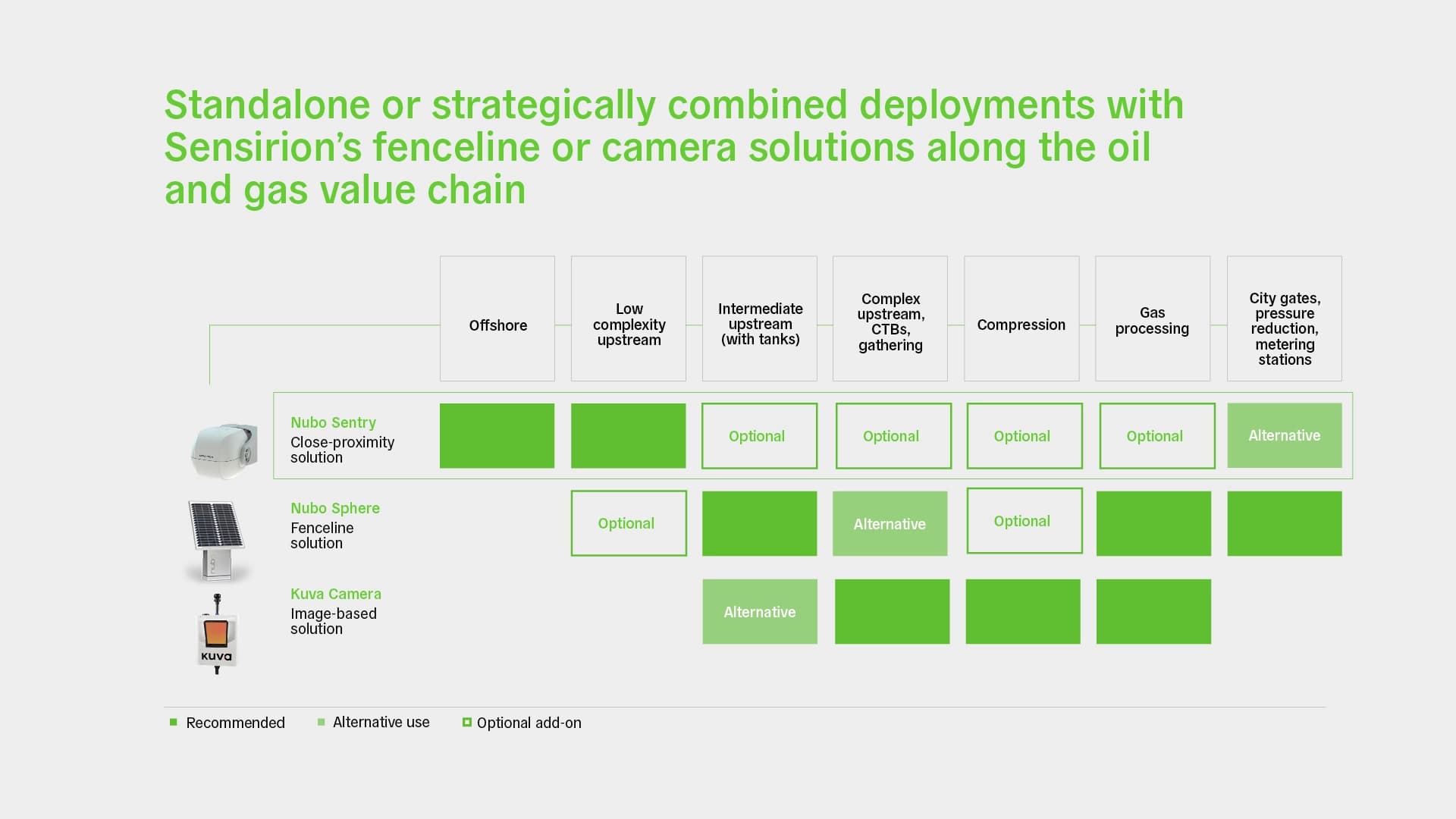
Combine Nubo Sentry with Nubo Sphere or the Kuva camera for comprehensive coverage and optimized performance on more complex sites—targeting specific emission sources like tanks or compressors more effectively and cost-efficiently than deploying multiple standalone solutions.
Key features at a glance:
Intrinsically safe: ATEX/IECEx Zone 0 certified; MET C/US Class I Div. 1 certification pending
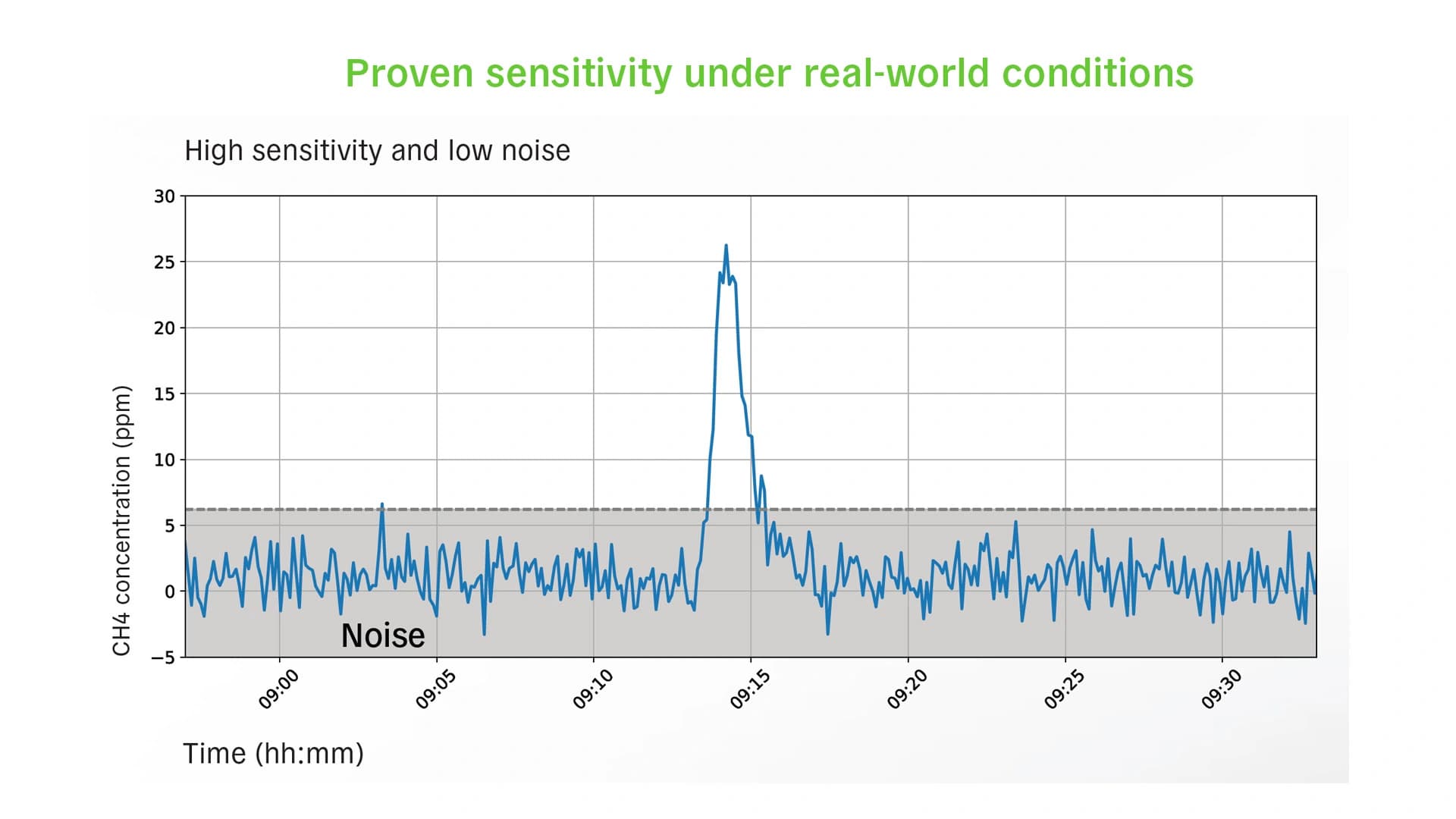
Exceptional sensitivity: detection limit < 10 ppm — 5x lower than commercially available alternatives
Precision sensing: highly selective to methane using low-power photoacoustic spectroscopy
Maintenance-free: 5 years of battery life at 20-second measurement intervals
LoRaWAN communication allows reliable, wide-range communication while keeping data secure
Easy deployment: wireless solution for cost reduction — no wiring, no hassle
Rugged design ensures dust-tightness, water immersion protection, and corrosion resistance, with IP65, IP67, and NEMA 4X ratings
Extreme resilience: operates from -40°C to 65°C and up to 100% humidity
Why photoacoustics delivers where others fall short
At Sensirion Connected Solutions, we build on more than 25 years of deep sensor expertise of our mother company, Sensirion AG—a global leader in advanced sensor technologies and one of the world’s top suppliers of thermal conductivity (TC) sensors for applications such as refrigerant leakage detection. This profound understanding of TC sensing has uniquely positioned us to innovate beyond its limitations.
Our proprietary photoacoustic spectroscopy technology represents the next evolution in gas sensing. While close-proximity solutions based on TC technology typically detect methane concentrations down to 50 ppm and only so under very ideal environmental conditions, our photoacoustic sensors beat this by at least a factor 5 delivering methane-specific accuracy down to 0.5 ppm (Nubo Sphere) and 10 ppm (Nubo Sentry). With 99% methane selectivity and negligible cross-sensitivities, in contrast to TC sensors, they detect even short-lived emission peaks independent of the actual gas composition with precision and speed.
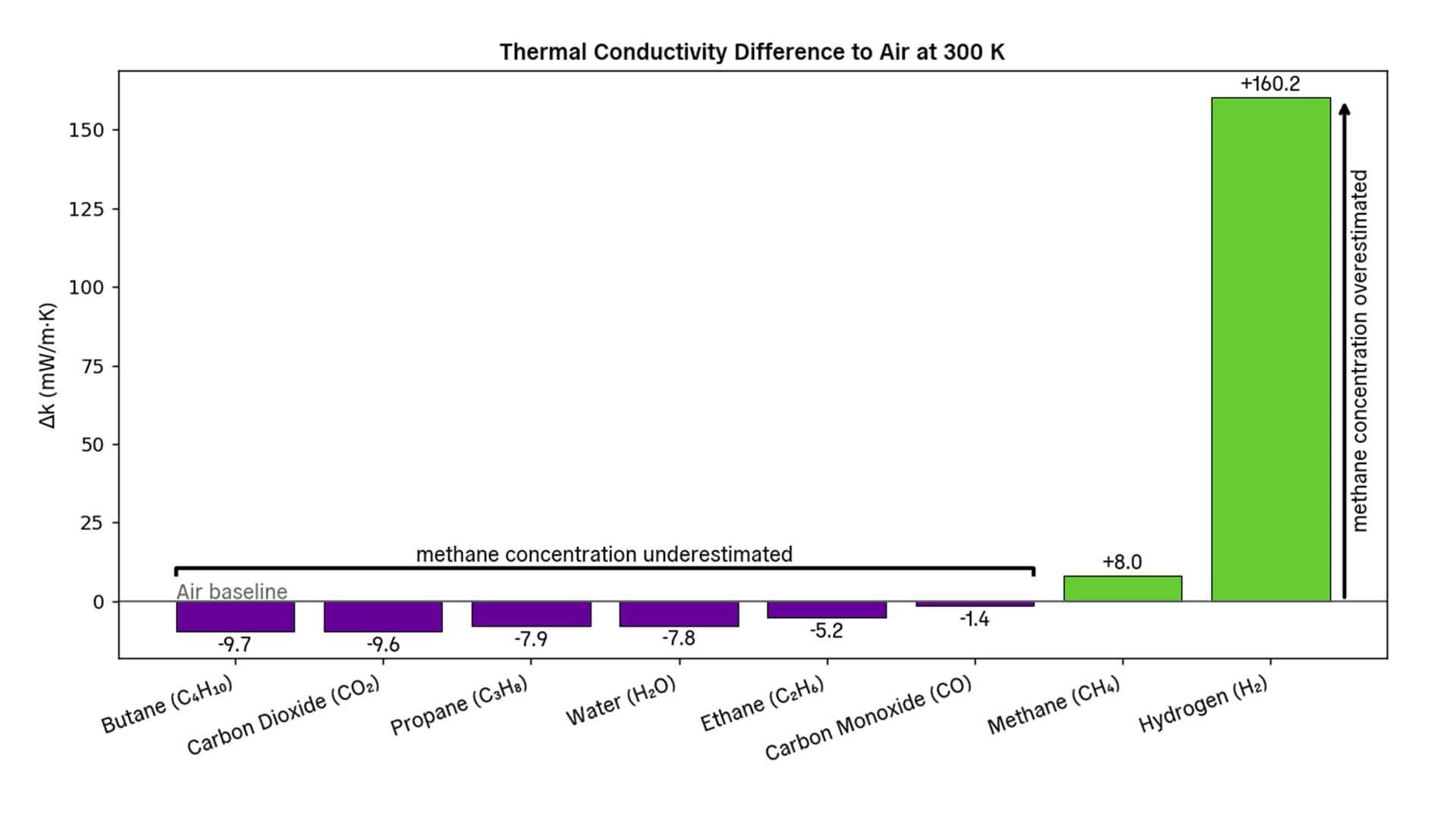
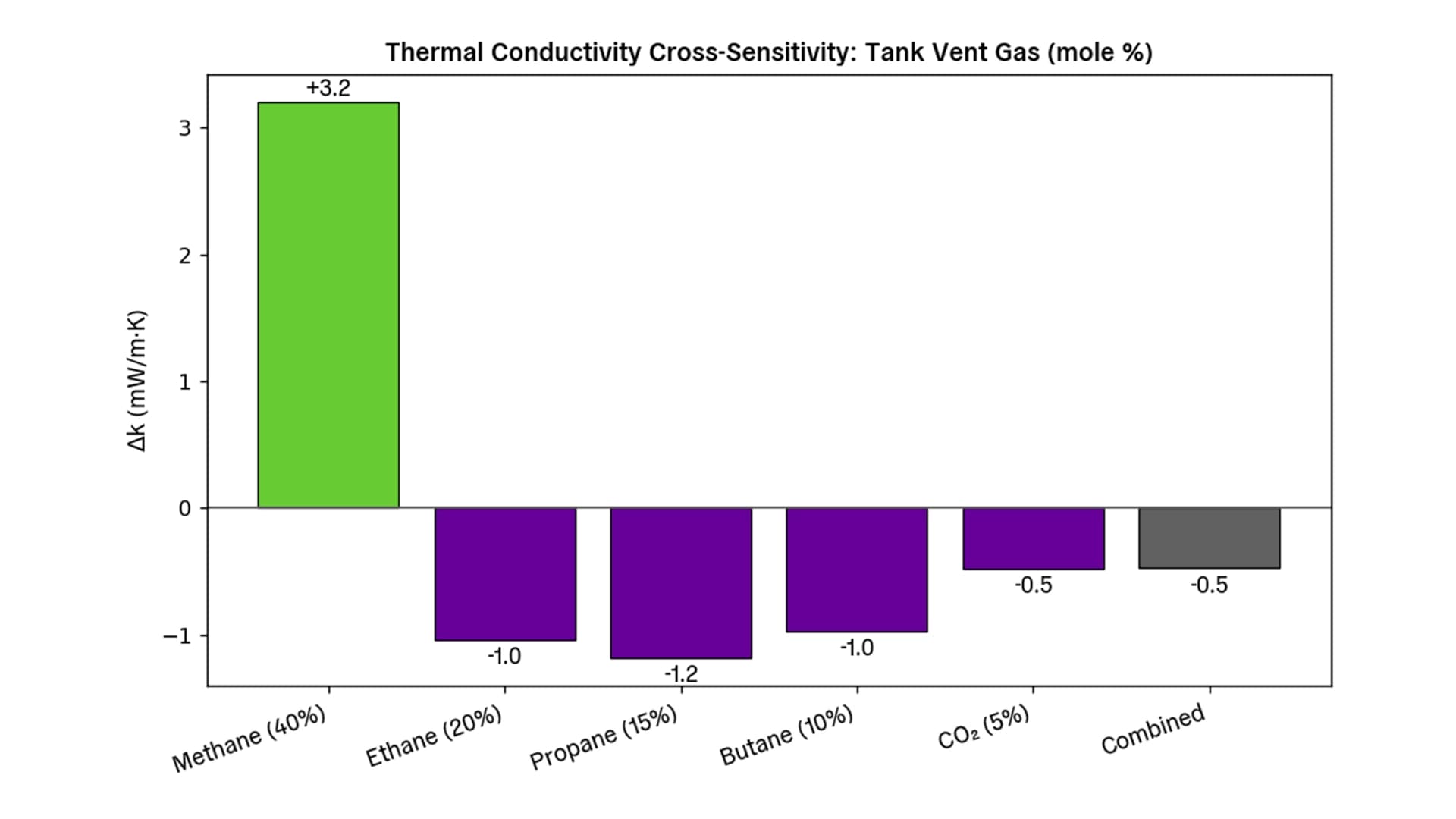
Did you know that different gases in natural gas emissions have different thermal conductivities, meaning they carry heat differently? Methane has a higher thermal conductivity than air at room temperature—it transfers heat more easily. But gases like ethane and propane do the opposite, with lower thermal conductivity than air. When these gases mix, their heat-carrying effects can cancel each other out, making it harder to detect them using temperature-based sensing methods. A potential risk that Sensirion was not willing to take.
This breakthrough combination of optical measurement technology with battery-driven power management, that makes up Nubo Sentry, translates into highly reliable and earlier emission detection, higher detection probability, and reduced total cost of ownership resulting in improved safety, minimized product loss, and greater confidence in meeting operational excellence goals.
Spotlight on Nubo Sentry at TADI 2025
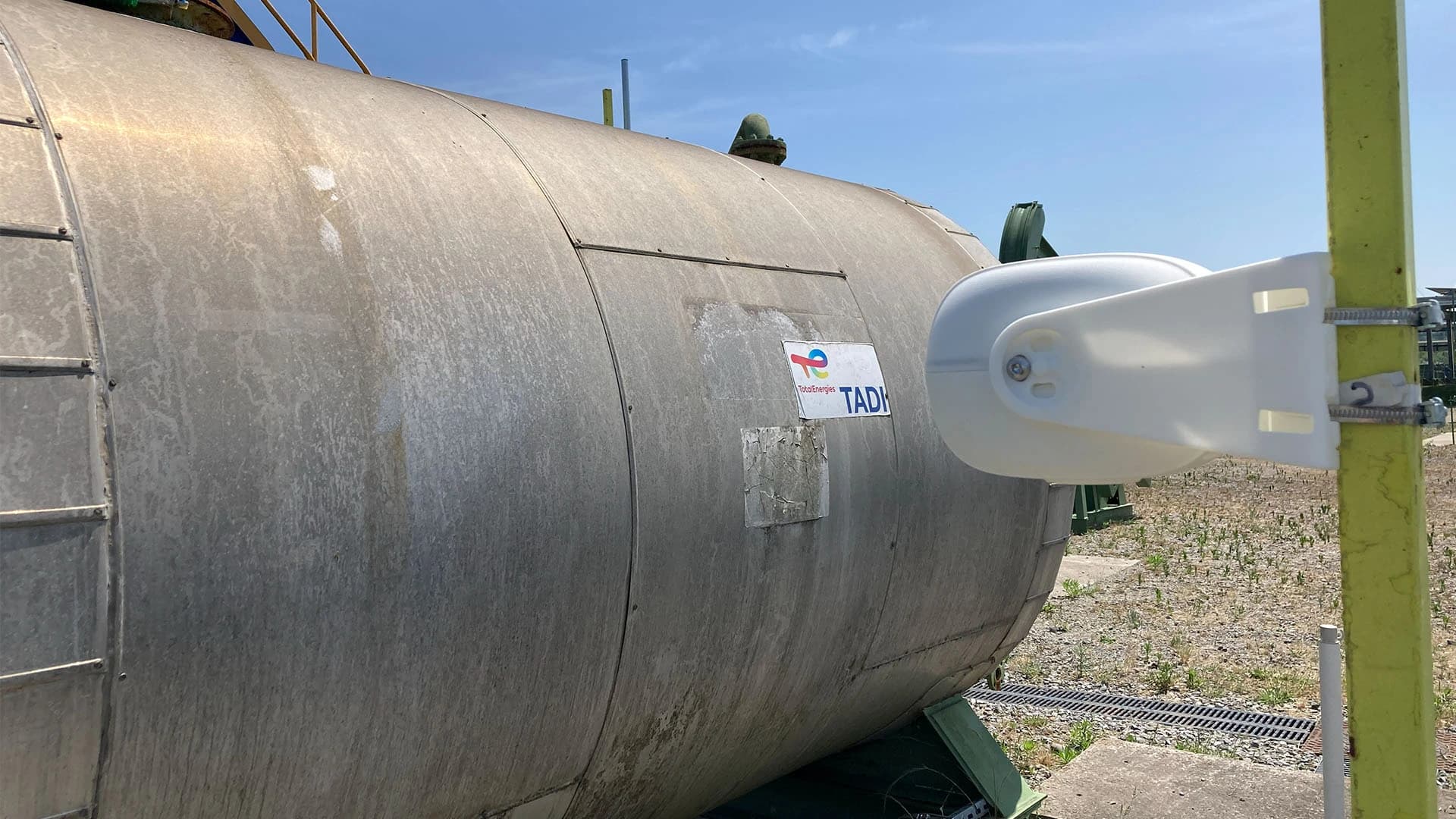
Nubo Sentry has delivered results, confirming its outstanding sensitivity and precise detection limit under real world conditions at the TotalEnergies Anomalies Detection Initiatives (TADI) test platform in 2025.
Release rates ranged from 0.4 to 104.4 kg/h over 20 minutes to 190 minutes, with an average release duration of 50 minutes. From a total of 29 experiments Nubo Sentry detected methane reliably from all emissions events.
Key achievement: reliable detection of methane concentrations below 10 ppm, at least a factor 5 lower than other commercially available solutions that would have missed emissions due to the distance to the emission source or the release rate.

Onshore operations
Turn data into decisive action. The intrinsically-safe Nubo Sentry gives you flexible installation options that fit any onshore site and any monitoring goal. Find emissions faster, cut costs, and excel in safe operations.
Learn more
Offshore operations
Offshore conditions are tough. Nubo Sentry makes methane monitoring simple with 24/7 coverage, no wiring, and years of maintenance-free operation. Spot emissions early, protect aging offshore assets throughout their lifecycle, and enable your crew to plan and execute repairs more efficiently.
Learn more
Want to learn more?
Don’t hesitate to contact us! We are happy to talk.